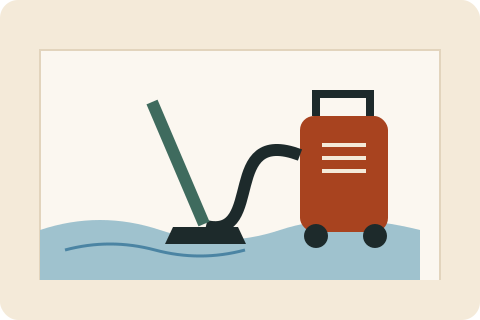
Standing water does the most damage in the first 24 to 48 hours. Extraction pulls the bulk of it out with pumps and truck-mounted or portable extractors, so drying equipment can do its job.
What extraction involves
Crews start by stopping the source, then use submersible pumps for deep water and wand or weighted extractors to pull water out of carpet and pad. Removing water as liquid is far faster than evaporating it later, which is why extraction comes before fans and dehumidifiers.
Common sources in Spanish Fork homes
- Failed water heaters and washing machine hoses
- Burst supply lines after hard January freezes
- Sump pump failures during spring snowmelt
- Window wells filling during heavy storms
What extraction includes
Extraction focuses on removing accessible standing water. During the assessment, ask which rooms, floor coverings and contents are included, how the water will be removed, and what happens immediately afterward. Describe any water that has moved into adjoining rooms or onto a lower floor.
What happens after the water is removed
A floor that looks clear of water may still need further assessment. Ask the provider to explain the drying plan for affected materials, the equipment proposed and how progress will be checked. Extraction, drying and repairs may appear as separate items in the estimate.
Questions before work begins
Who is responsible for stopping the original source? Is moving furniture included? How will affected belongings be documented? Ask for the proposed scope and any additional charges in writing.
What to do in the first hour
- Stop the water. Close the main shutoff valve or the fixture valve.
- Kill power to wet areas at the breaker, if you can reach it without standing in water.
- Move valuables up. Photos, electronics and documents off the floor.
- Photograph everything before anything is moved, for your insurance claim.
- Call your insurer to open a claim and note the claim number.
- Call a restoration crew so extraction starts within hours, not days.
Frequently asked questions
How fast should water be extracted?
As soon as possible. Mold can start to grow within 24 to 48 hours on wet materials, so extraction should begin as soon as the water is found.
Can carpet be saved after extraction?
Often yes for clean water, if it is extracted quickly. Pad is usually replaced. Carpet soaked by sewage is normally discarded.